How an Automatic Home Water Pump Works
Why does the pump start when a tap opens and stop afterwards? Learn about the pressure controller, check valve, and what its lights and sounds mean.
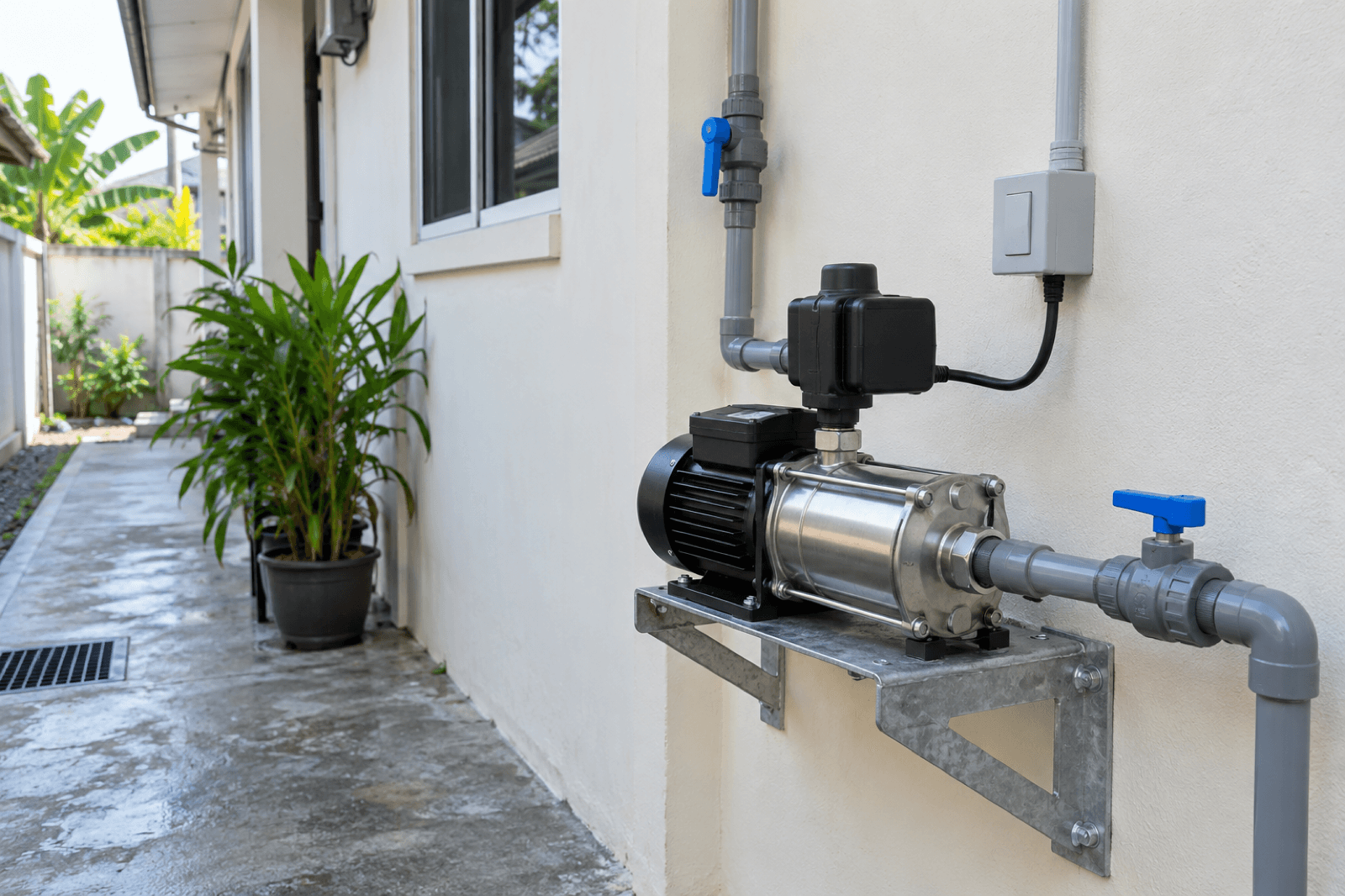
An automatic household pump looks like an ordinary box that hums when you open a tap. Behind that, a few small parts are working together. Once you understand how it works, it is much easier to tell whether a sound or a light is normal or a sign of trouble.
The main parts of an automatic pump
A pump described as automatic is usually controlled by water pressure, not by a switch you press. Three parts matter most.
Motor and impeller
An electric motor spins an impeller inside the pump body. That spinning pushes water forward and raises its pressure. Motor power is rated in HP, for example 0.50HP, 0.75HP or 1.00HP.
Pressure controller
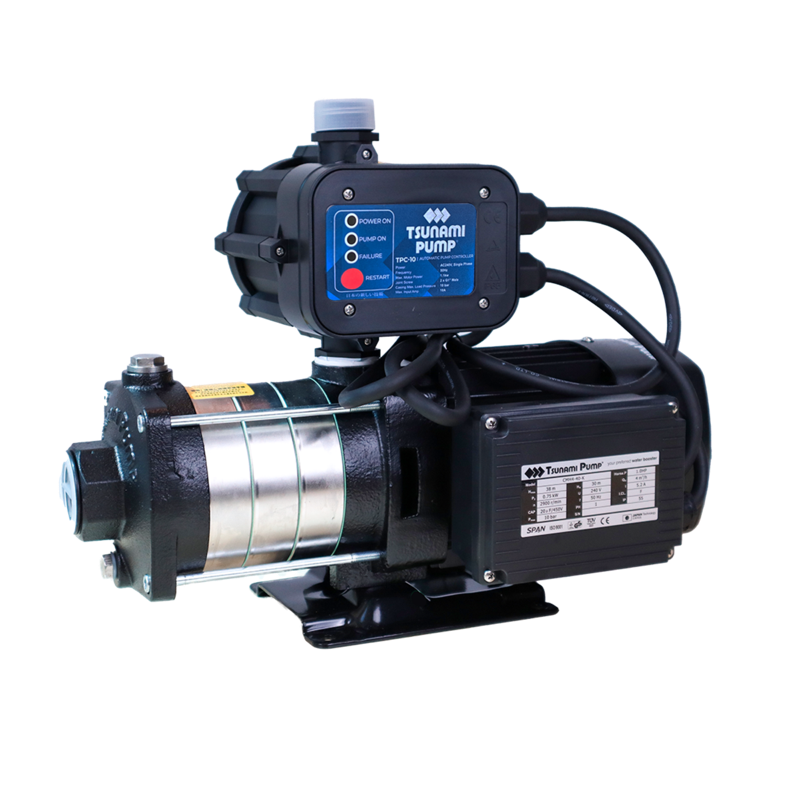
The pressure controller, sometimes called a pressure switch, is the brain of the pump. It reads the pressure in the pipe all the time. When pressure drops, it starts the motor. When the flow stops and pressure builds back up, it switches the motor off after a few seconds.
Check valve
A check valve lets water move in one direction only. Its job is to hold water in the pipe so it does not drain back to the tank when the pump stops. Without it, pressure would fall on its own and the pump would start even though nobody opened a tap.
What happens when you open a tap
- The tap opens, water starts flowing and pressure in the pipe falls.
- The pressure controller senses the drop and starts the motor.
- The pump pushes water from the tank into the pipes at higher pressure.
- The tap closes, flow stops and pressure rises.
- The controller waits briefly to be sure the flow has really stopped, then switches the motor off.
That short delay before the pump stops is normal. It prevents the pump from starting and stopping repeatedly when you open and close a tap quickly.
Why the pump may run briefly with no tap open
If the pump kicks in once or twice over a long stretch, a toilet may be refilling its cistern. That is ordinary. If it starts every few minutes, there may be a small leak somewhere or the check valve is not sealing properly.
What the lights and sounds mean, in plain terms
Every brand and controller model arranges its lights differently, so check your pump manual for the exact meaning. In general:
Lights
- A power light on means the controller is receiving electricity.
- A running light usually comes on while the motor is working.
- A warning or fault light, where fitted, often means the pump has stopped itself to protect the motor, for example when no water is coming in.
Sounds
- A steady hum while a tap is open is normal.
- A rough or rattling noise can point to air in the pipes or a problem with the impeller.
- A motor that hums but delivers no water is a sign to switch off at once and get it checked.
Safety first
If you see sparks, smell burning or notice water dripping onto the controller, turn off the pump at the main switch. Do not open the controller cover or touch the wiring. Electrical work should be left to the installer.
What to record if the pump misbehaves
We can quote a repair after seeing photos and a video. For a more accurate diagnosis, prepare the following:
- Photos of the pump from the front and side, including the HP label if it is readable.
- A photo of the pressure controller showing which lights are on.
- A short video of 20 to 30 seconds while a tap is opened and closed, so we can hear the sound and see when the pump stops.
- Photos of the tank and its outlet pipe.
If the pump is too old or not worth repairing, new pumps with supply and install prices are listed in our price section. We take enquiries from across Malaysia, including homes in Petaling Jaya, Seremban and Kuantan; scheduling for your area is confirmed on WhatsApp.
Is your pump making odd noises or blinking its lights? Record a short clip and send it to us for a look. Send a video