How to Estimate Your Home Water Pump's Electricity Cost
Convert HP to watts, estimate daily running hours, work out kWh and multiply by the rate on your bill. A simple guide to pump running costs.
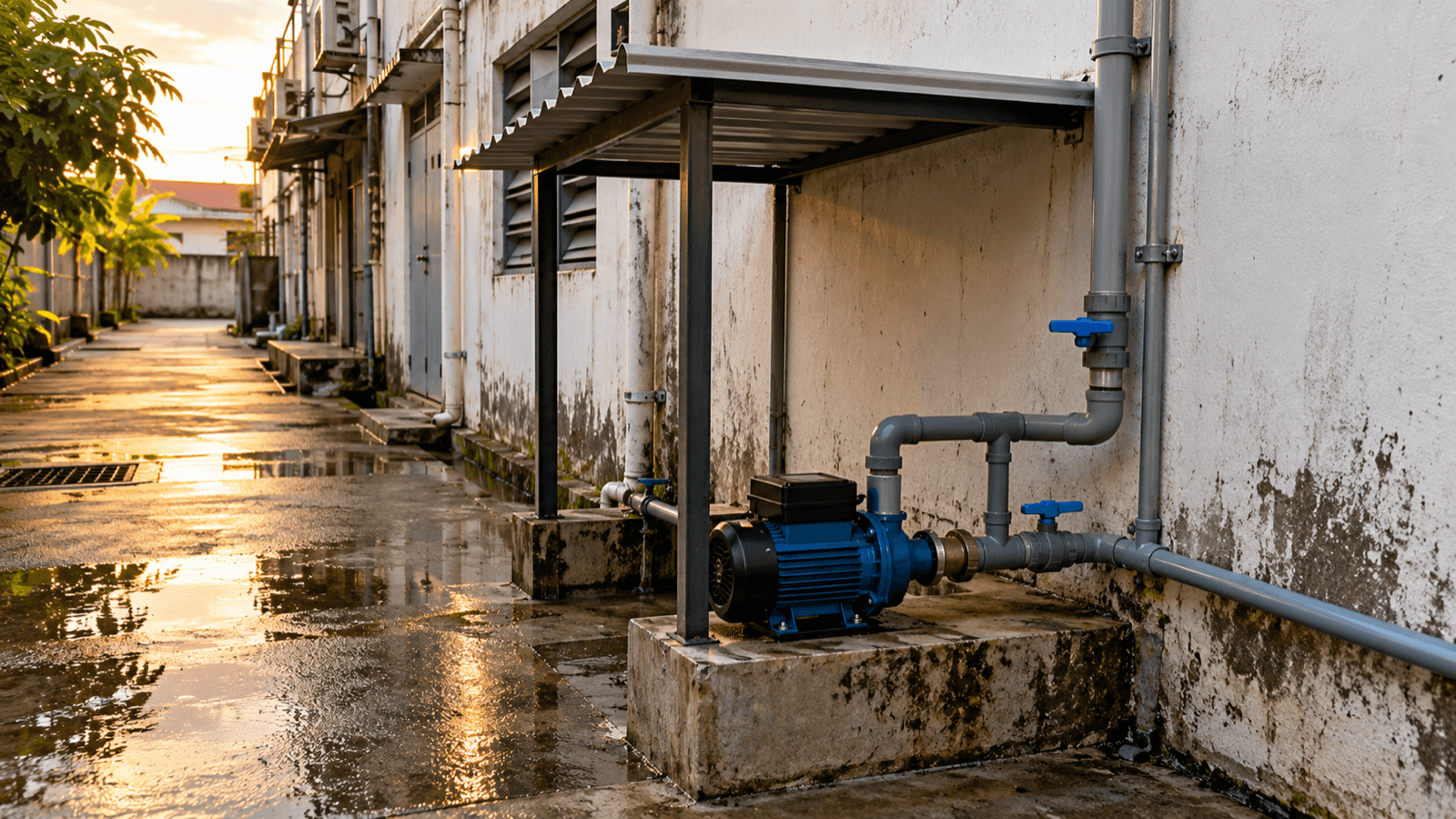
Before fitting a water pump, many homeowners worry the electricity bill will jump. In fact you can estimate the cost yourself with a phone calculator and your latest electricity bill. This article walks through it step by step, with no guesswork.
Step 1: Convert HP to watts
Home pump power is usually written in HP (horsepower). One HP equals roughly 746 watts. So the motor output for the sizes commonly fitted in homes is:
- 0.50HP is about 373 W
- 0.75HP is about 560 W
- 1.00HP is about 746 W
Why the pump label is more accurate
The figures above are motor output. The electricity drawn from the socket is usually a little higher, because no motor is one hundred percent efficient. If the label on your pump states an input power in watts, use that number. If not, the HP figure is good enough for a rough estimate. Do not open the pump or controller cover to look for a label; photograph it from the outside only.
Convert watts to kilowatts
Electricity bills are counted in kWh, so divide watts by 1,000. For example, 560 W becomes 0.56 kW.
Step 2: Estimate how long the pump runs each day
An automatic pump only runs while a tap is open. It is not on all day. Running time depends on your household habits more than on the size of the house.
A simple way to estimate
- Add up the minutes everyone spends in the shower each day.
- Add the time the washing machine spends filling, plus washing dishes or the car.
- Add a little for toilets and hand washing.
- Convert the total minutes to hours. For example, 90 minutes is 1.5 hours.
For a closer figure, watch the pump for a day or two and note when it runs. A sensible estimate for your own home is more useful than a number taken from the internet.
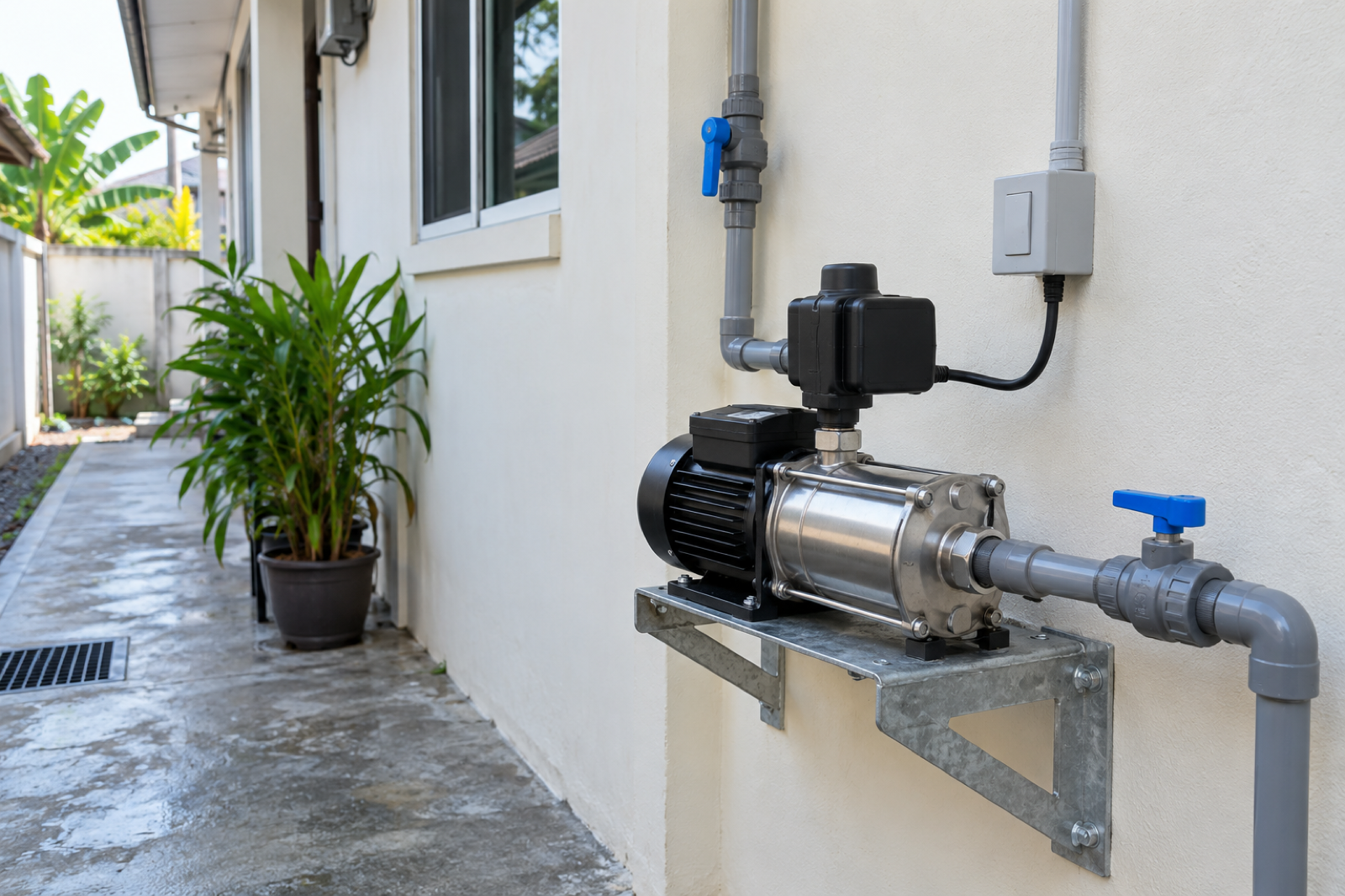
Step 3: Work out kWh and multiply by your tariff
The formula is simple: kWh = kW × hours running. Then multiply by the number of days in a month.
A worked example
Say you have a 0.75HP pump (0.56 kW) and it runs a total of 1 hour a day.
- Per day: 0.56 kW × 1 hour = 0.56 kWh
- Per month (30 days): 0.56 × 30 = 16.8 kWh
This is only an example to show the method. Your home may run the pump for less time or more.
Find the rate on your own bill
The rate per kWh varies with how much you use and can change over time, so we do not quote a figure here. Look at the charges section of your latest electricity bill, take the rate that applies to you, and multiply it by the monthly kWh above. The result is your estimated extra cost for the pump.
Why choosing the right HP matters
A pump that is too big for your home draws more watts every time it starts. It can also cycle on and off often because pressure builds quickly, which is hard on the motor and the controller. A pump that is too small may run longer to keep up, and the flow still disappoints.
How we recommend an HP
We look at the number of floors and bathrooms, where the tank sits, the pipe size and how many taps usually run at once. From that we suggest 0.50HP, 0.75HP or 1.00HP. Supply and install prices for each size are in our price section.
Signs your pump may be the wrong size
- The pump starts and stops several times during one shower.
- Pipes shake or bang when the pump kicks in.
- Flow is still weak even though the pump runs for a long time.
Owners of terrace homes in Kajang, semi-detached houses in Johor Bahru or older shophouses in George Town can send their house details for a size recommendation. Scheduling for your area is confirmed on WhatsApp.
Want to know which pump size suits your home? Send photos of your tank and pipes, plus how many bathrooms you have. Message us