Protecting Your Home Pump During a Water Supply Cut
An empty tank can leave your pump running dry. Learn what to do before and after a supply interruption so the pump restarts safely.
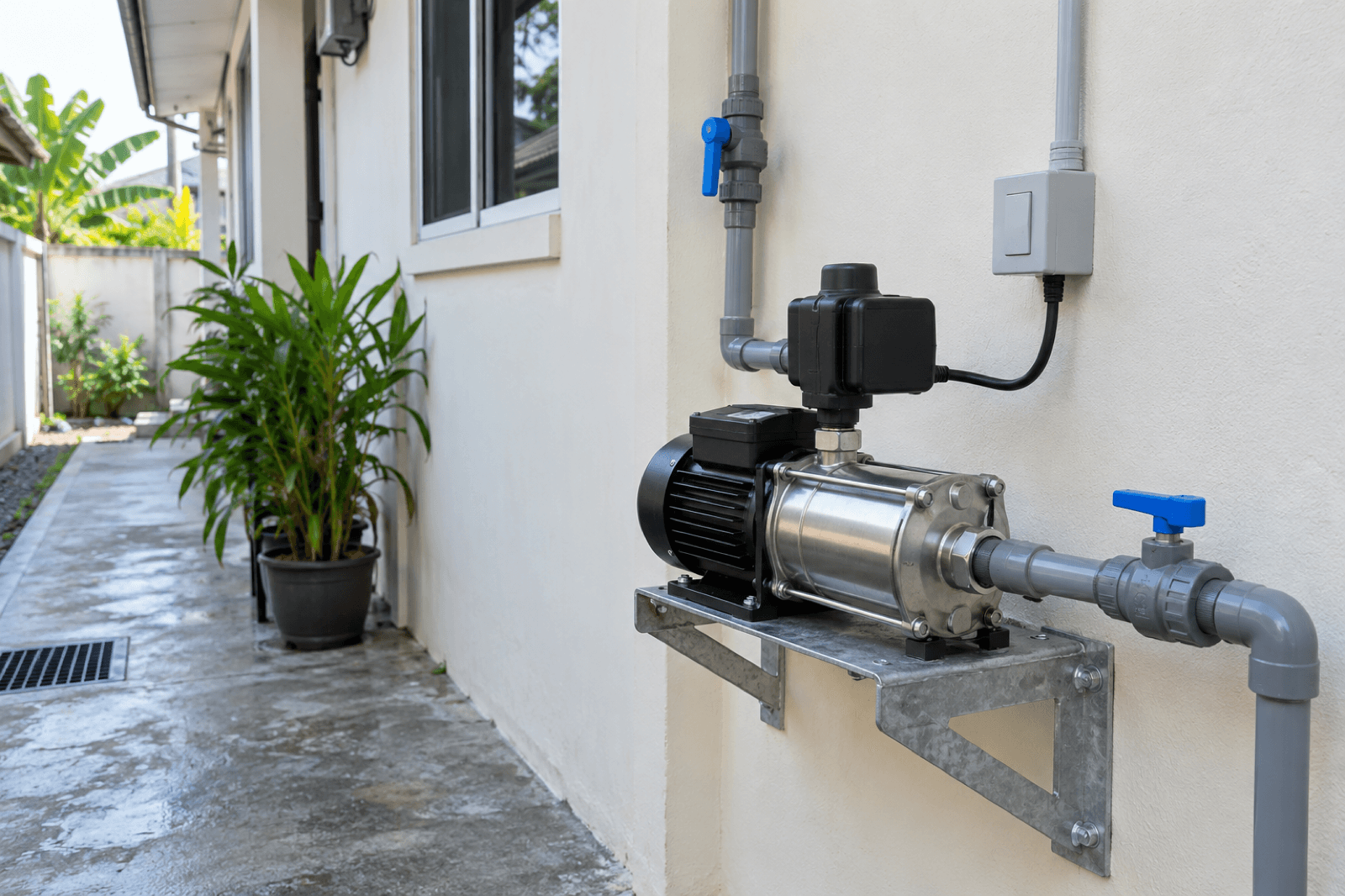
Notices of a water supply interruption usually arrive a few days ahead. Most people immediately think about filling buckets and bottles. But if your home or shop has a water pump, there is one more thing to protect: the pump itself. A pump that runs without water can be damaged in a short time.
Why the pump is at risk during a cut
A booster pump draws water from the tank and pushes it into the house pipes. That water also cools and lubricates the parts inside the pump. When the tank runs empty, the pump can still start because a tap is open, but all it pulls in is air.
What dry running means
Dry running means the pump is working with no water inside it. Without water, the temperature around the impeller and seals climbs quickly. Seals can wear out, and in bad cases the motor can overheat.
Controller protection is not always enough
Some pressure controllers can stop the pump when they sense no water. That helps, but do not rely on it completely. An old or already faulty controller may not react as expected. The safest approach is to switch the pump off yourself when the tank is empty.
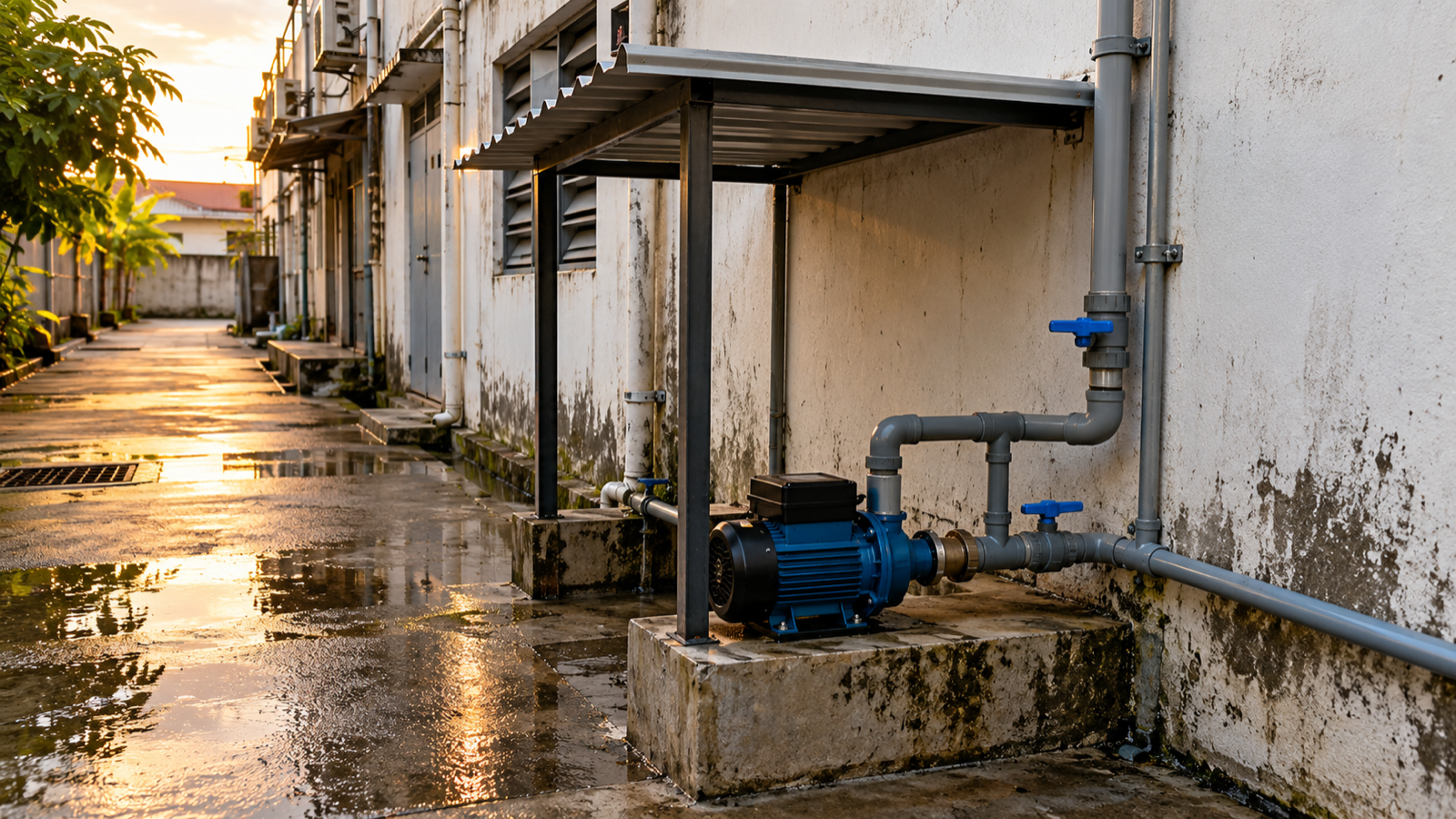
Before a scheduled interruption
- Make sure the tank is full the day before the cut begins.
- Find your pump switch, whether a socket or a switch on the distribution board, so it is easy to turn off later.
- Tell everyone in the house or shop that the pump will be switched off when the tank is nearly empty.
- Store drinking and cooking water in separate containers.
During the interruption
Use tank water sparingly. When the flow turns weak or sputters with air, the tank is nearly empty. Switch the pump off at that point. Do not let it keep trying to start with no water.
If you are away
If the cut happens while you are travelling or out at work, it is safer to switch the pump off before you leave. Whatever water remains in the tank can still reach the ground floor taps by gravity.
After the supply returns
A common mistake is switching the pump back on the moment water comes back. Follow this order so the pump restarts safely.
Step by step
- Let the tank fill completely, or nearly, first. Early water is sometimes cloudy; give it a little time to settle.
- Open one ground floor tap on gravity to push air and cloudy water out of the pipes.
- Switch the pump on.
- Open one tap and watch the pump's first start.
Air in the pipes
After a cut, air often gets trapped in the pipes. You may hear spluttering or see water come out in bursts for a few seconds. This is normal and usually clears once the tap has run for a moment.
What to watch during the first start
- The pump starts and the flow settles quickly.
- The pump stops as usual when the tap closes.
- There is no rough noise, burning smell or water dripping from the joints.
When to ask for a check
If the pump did run dry, or after the water returns you notice any of the following, switch off and get it looked at:
- The pump hums but no water comes out.
- The pump keeps starting and stopping even with taps closed.
- Water drips from a pump body that used to be dry.
- A warning light on the controller stays on.
Do not open the controller or wiring yourself. Send photos and a short video and we will quote the repair after seeing them. If the pump needs replacing, supply and install prices are in our price section.
Homes and shops in Cheras, Bangi and Kota Bharu that rely on a pump can contact us for a check after an interruption. We confirm on WhatsApp when a visit to your town can be arranged.
Pump not starting properly after the water came back? Send us a video of it starting up. Contact us