Home Water Pump Care: A Simple Routine for Owners
A monthly look-and-listen routine for your home water pump, how to keep the pump area dry, and when to send a video to the installer.
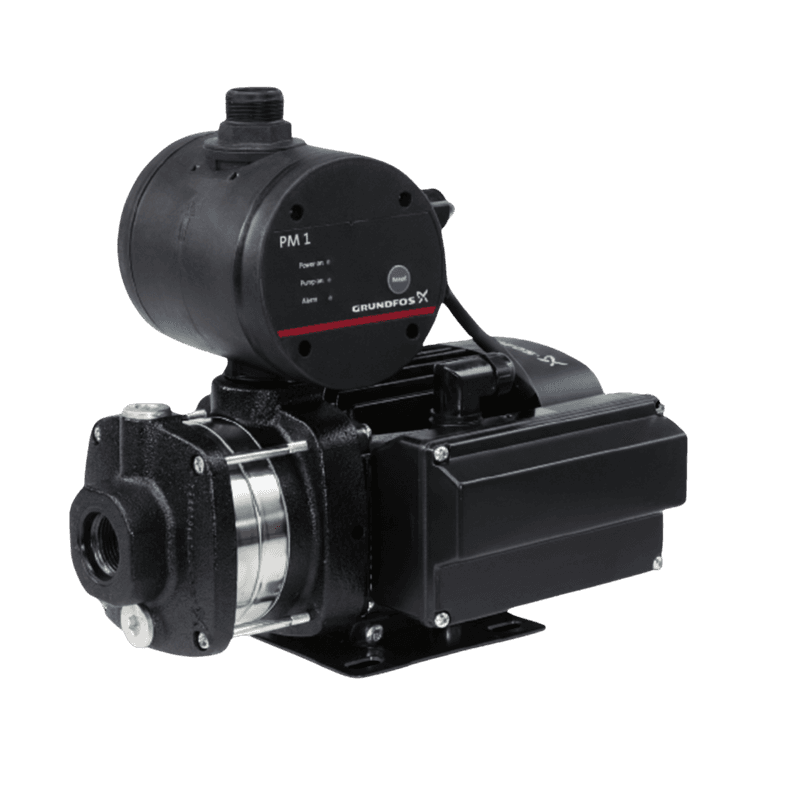
A home water pump works every day with very little attention. It switches on each time a tap opens, a toilet flushes or the washing machine fills. Most owners only think about the pump when the water suddenly turns weak or a strange noise comes from the side lane. A simple owner's routine needs no special tools. It is just a habit of looking and listening that helps you catch problems early, before they turn into bigger repairs.
The monthly routine: look and listen
Pick one day each month, such as the first weekend, and spend five minutes at the pump. You do not need to open anything. Just observe.
Listen while the pump runs
Ask someone to open a tap indoors while you stand near the pump. A healthy pump makes an even hum. Remember that sound so you can compare it next month.
Sounds worth noting down
- Clicking, squeaking or grinding that was never there before.
- Stronger vibration, to the point that the bracket or pipes shake along.
- The pump switching on and off repeatedly in a short time during normal use.
- The pump still running after every tap is closed.
Look under and around the pump
Check the floor below the pump and the pipe joints on either side. A small steady drip, water marks that keep reappearing, or rust around a joint are early signs worth photographing.
Keep the pump area dry and ventilated
A pump motor lasts longer when it stays dry and does not overheat. Many avoidable problems start with the pump's surroundings.
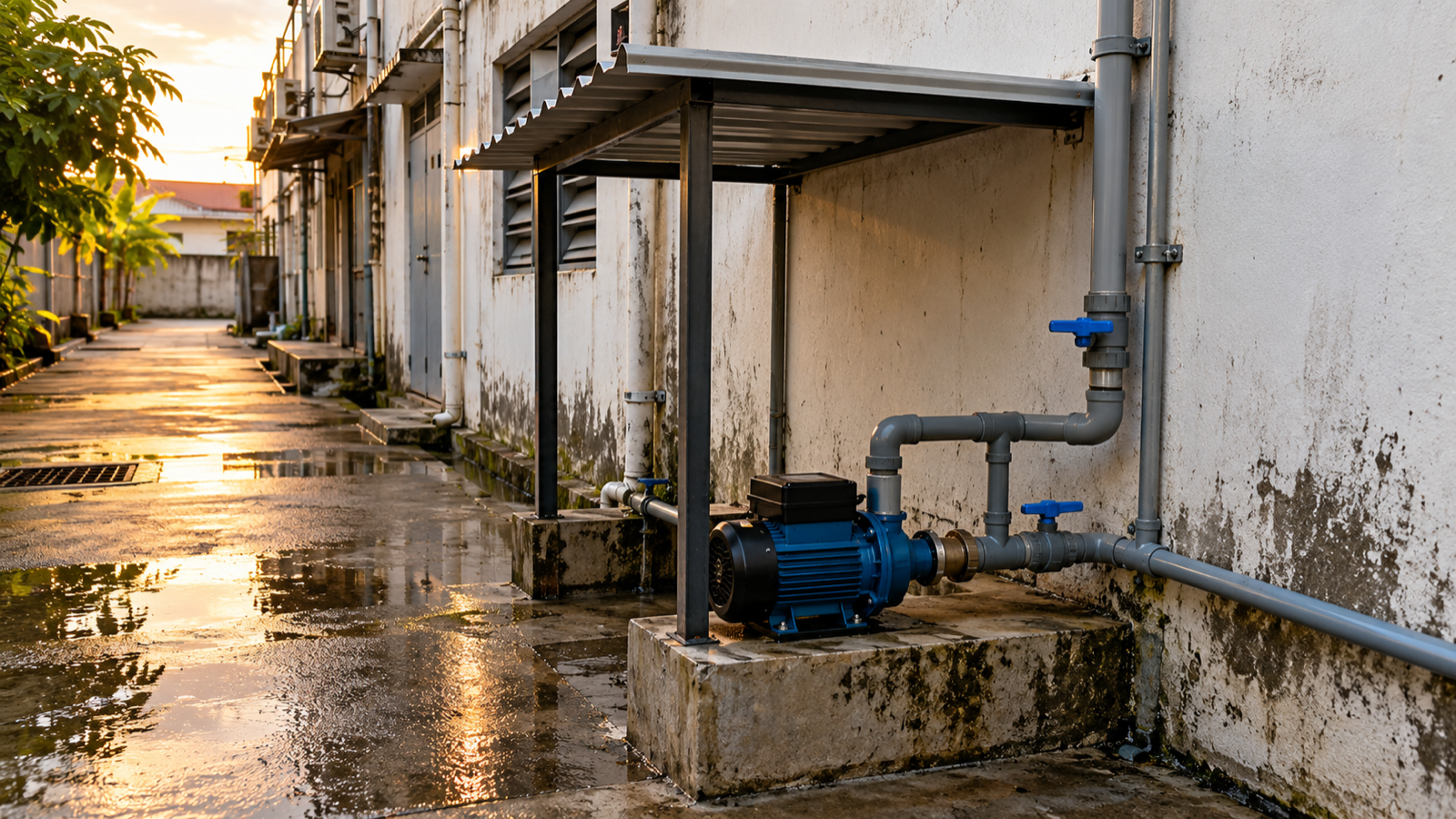
Shield it from rain and splashes
An outdoor pump needs a small roof or cover that still lets air through. Make sure rain from the roof edge or a drain does not drip straight onto the motor. If the pump sits on a concrete plinth, the plinth should be a little higher than the floor so standing water does not reach it.
Give it room to breathe
Do not wrap the pump in cloth, plastic or a tight box. The motor gives off heat as it works, and that heat needs to escape. Avoid stacking buckets, shoes or paint tins right against it as well.
Clear debris and leaves
Dry leaves, dust and insect nests collect around pumps, especially in side lanes. Sweep the area regularly. Wipe only the outside with a dry cloth, and never spray water at the motor or the controller box.
Do not forget the roof tank
The pump can only move the water that is in the tank. If the tank is dirty or silted, sediment can travel into the pipes and upset the valves.
Easy things to check
- The tank lid is in place and closed so leaves, insects and small animals stay out.
- The water does not smell and there is no thick layer of sludge at the bottom.
- There is no constant flow from the overflow pipe, which may point to a float valve problem.
Cleaning the inside of a tank means working at height. If you are not comfortable climbing, leave it to someone used to that job.
What not to do yourself
An owner's routine covers observation and outside cleaning only. Leave these to the installer:
- Opening the motor cover or the pressure controller box.
- Touching, reconnecting or changing any wiring.
- Tightening or undoing pipe joints while the system is under pressure.
- Adjusting the pressure settings on the controller.
If you see sparks, smell burning or the main breaker trips each time the pump starts, switch off the supply to the pump and do not turn it back on. Leave the electrical check to the installer.
When to send photos or a video
Note what you see each month. If one of the signs above appears and keeps coming back, record a short video of the pump's sound while a tap is open, and take photos of the pump label, the pipe joints and the area around it. A video with sound helps us understand the problem a great deal. Repairs and diagnosis are quoted on WhatsApp after we see those photos and the video.
If the pump does need replacing, supply and installation prices by brand and HP are in the price section. Readers in Taiping, Temerloh or Kota Kinabalu can see their town page, and the schedule for your area is confirmed on WhatsApp. Send a video once odd signs begin to show.